How to Take Care of Elderly Parents in India While Living Abroad
 Indiarootsuniversal@gmail.com
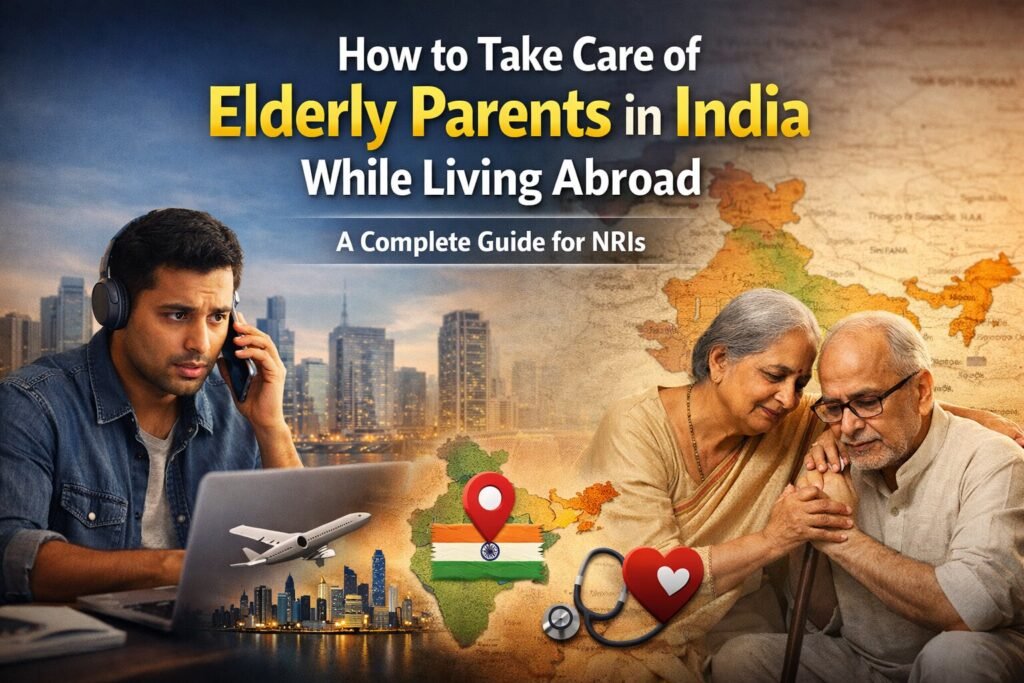
There’s a moment every NRI knows too well.
You’re sitting thousands of miles away — in your apartment in Toronto, your office in New Jersey, or your home in London — and your phone rings.
It’s your mother. She hasn’t been feeling well.
Or your father, mentioning almost casually, that he slipped in the bathroom last week.
Your heart sinks. You feel completely helpless.
You chose to build a life abroad. But your parents are still back home in India — ageing, sometimes unwell, and often alone.
And no matter how successful you become, that worry never really goes away.
If this sounds familiar, you’re not alone. Millions of NRI families face this exact challenge every single day.
The good news? With the right plan and support, you can take care of your elderly parents in India — even from the other side of the world.
This guide walks you through everything — emotionally, practically, and financially.
Why Taking Care of Elderly Parents in India From Abroad Is Challenging
Let’s be honest about the challenges first.
When your parents live in India and you’re abroad, you’re dealing with more than just distance.
You’re navigating time zones, language barriers with local healthcare providers, unreliable domestic help, and the deep cultural expectation that children should care for their parents personally.
And then there’s the guilt.
The quiet, persistent guilt of not being there.
Many NRIs try to manage everything remotely — calling every day, sending money, asking relatives to check in.
But as parents age, their needs grow more complex.
Managing diabetes. Recovering from a fall. Navigating hospital bureaucracy. Dealing with loneliness.
These things require a consistent, physical presence that a phone call simply cannot replace.
Understanding this gap is the first step to bridging it.
Step 1: Have an Honest Conversation With Your Parents
Before anything else — talk to them.
Openly. Without assumptions.
Many elderly parents in India are reluctant to ask for help. They don’t want to worry their children. They may insist they’re “fine” even when they’re not.
So approach this conversation with sensitivity. Ask them:
- How are they managing their daily routine?
- Are they comfortable with their diet and medication?
- Do they feel lonely or isolated?
- What worries them most?
Listen more than you speak.
Understanding their emotional state — not just their medical needs — is the foundation of good elder care.
Step 2: Assess Their Health and Daily Needs Properly
Once you’ve had that conversation, do a thorough assessment of what your parents actually need.
Medical needs: Do they have chronic conditions like diabetes, hypertension, or arthritis? Are they on regular medications? When did they last have a full health check-up?
Mobility and safety: Can they move around the house safely? Are there fall risks — loose rugs, slippery floors, no grab bars in the bathroom?
Daily living: Can they cook for themselves? Do they manage grocery shopping and household chores? Are they eating well?
Emotional wellbeing: Do they have a social circle? Are they engaging with friends or community activities? Or are they spending most of their time alone?
This assessment helps you understand exactly what kind of support they need — and prevents you from either under-supporting or overwhelming them.
Step 3: Build a Reliable Local Support System in India
Even with the best intentions, you cannot manage everything from abroad without local support.
Building a reliable network on the ground in India is non-negotiable.
Trusted neighbours and relatives: Identify two or three people who can check in regularly and reach you in an emergency.
A reliable domestic helper: A good housekeeper or cook makes an enormous difference. But finding trustworthy help — and making sure they actually show up — requires consistent oversight.
A local doctor: Establish a relationship with a good general physician near your parents’ home. Ensure your parents know how to reach them.
A professional elder care service: For many NRI families, this is the most reliable option.
A trusted elder care provider acts as your local guardian — managing medical appointments, daily check-ins, emergencies, and emotional wellbeing — so nothing falls through the cracks.
Step 4: Stay Actively Involved in Their Health
Health management is one of the most critical parts of how to take care of elderly parents in India from abroad.
Medication management: Ensure medications are always stocked and taken on time. A professional caregiver can provide daily reminders and monitoring.
Regular health check-ups: Schedule quarterly check-ups and ensure someone accompanies your parents to appointments. Get reports shared with you digitally.
Chronic condition monitoring: If your parents have diabetes or hypertension, ensure vitals are checked and logged regularly.
Post-hospitalisation care: The recovery period after discharge is critical. Ensure they have professional support at home — not just well-meaning but untrained family members.
Telehealth consultations: More Indian doctors now offer teleconsultations. This allows you to participate directly in medical conversations with your parents’ physician — even from abroad.
Step 5: Prioritize Their Emotional Wellbeing
Loneliness is one of the most serious — and most overlooked — health risks for elderly people living alone.
Studies consistently show that social isolation among seniors leads to depression, cognitive decline, and shorter lifespans.
In India, as joint families break apart and children move abroad, millions of elderly people are facing this reality silently.
Here’s what you can do:
Call regularly — and not just to check boxes. Don’t just ask “Did you take your medicine?” Call to talk. Reminisce. Share stories. Let them feel genuinely connected to you.
Use video calls whenever possible. Seeing your face creates a sense of togetherness that a voice call simply cannot match.
Encourage social engagement. Motivate your parents to stay socially active — through a local senior group, a religious community, morning walks, or hobby classes.
Arrange companionship visits. Professional elder care services often include regular companion visits — someone who spends time with your parents, listens to them, and keeps them company.
For many seniors living alone, this is genuinely life-changing.
Step 6: Handle Financial and Legal Affairs Proactively
Managing finances and legal matters from abroad can get complicated fast.
Handle these while you can — before a crisis forces it.
Power of Attorney: Consider granting a trusted family member or legal professional a Power of Attorney so they can manage matters on your parents’ behalf when needed.
Banking: Ensure your parents have easy access to their accounts. Help them set up digital payments if they’re comfortable with technology.
Health insurance: Review their coverage. Ensure premiums are being paid and that they know how to use their insurance during hospitalisation.
Property: Ensure all documents are up to date and legally secure. Property disputes in India can be complex — don’t leave this for later.
Some professional elder care providers also assist with documentation, banking liaison, and property management — a helpful option for families managing these processes remotely.
Step 7: Plan for Emergencies Before They Happen
Emergencies are unexpected. But your response to them doesn’t have to be.
Create a clear emergency plan that includes:
- A list of emergency contacts in India — doctor, hospital, trusted neighbour, care coordinator
- Your parents’ medical history, medications, and blood group — written down and easily accessible
- Your contact details (and another family member abroad) displayed prominently at home
- A professional care service with 24/7 emergency response capability
When a medical emergency happens at 2am India time — which is 8:30pm in London or 3:30pm in New York — you need to know that someone on the ground is already responding.
That peace of mind is priceless.
Best Way to Take Care of Elderly Parents in India From Abroad
After working with thousands of NRI families, we’ve found that the most effective approach combines five key elements:
1. Regular, meaningful communication Stay emotionally connected — not just functionally informed.
2. A strong local support network Neighbours, relatives, domestic help, and a trusted local doctor all working together.
3. Active medical management Medication monitoring, regular check-ups, chronic condition tracking, and telehealth consultations.
4. Emergency preparedness A documented plan, local contacts, and a 24/7 response system in place before anything goes wrong.
5. Professional elder care services A dedicated, trained team that provides consistent daily presence, care, and family updates.
Together, these five elements create a complete safety net for your parents — giving them the support they need and giving you the peace of mind you deserve.
This is the best way to care for parents in India as an NRI — not patchwork solutions, but a structured, professional, and compassionate system.
Step 8: Consider a Professional Elder Care Service in India
There comes a point where patchwork solutions are simply not enough.
A relative here. A domestic helper there. A monthly call from a neighbour.
As your parents’ needs grow, so must the level of support.
Professional elder care services — like IndiaRoots — are specifically designed for NRI families who want to take care of elderly parents in India from abroad.
They typically provide:
- Regular caregiver visits and daily wellness check-ins
- Medication management and health monitoring
- Doctor appointment coordination and hospital accompaniment
- 24/7 emergency response
- Companionship and emotional support
- Real-time family updates via WhatsApp and video calls
- Assistance with documentation, banking, and property matters
Think of it as having a trusted, professional presence in India — someone who truly knows your parents, cares for them consistently, and keeps you fully informed.
For many NRI families, this is not a luxury. It is a necessity.
Conclusion: You Don’t Have to Do This Alone
Figuring out how to take care of elderly parents in India while living abroad is one of the hardest parts of NRI life.
The distance is real. The worry is real. The guilt is real.
But so is your love for them.
And with the right plan in place — honest conversations, proper health management, a strong local network, professional support, and consistent emotional connection — you can ensure your parents live with dignity, comfort, and joy.
You don’t have to be physically present to be a caring, attentive child.
You just have to make sure the right people are present when you can’t be.
Let IndiaRoots Be Your Presence in India
At IndiaRoots, we understand what it means to love someone from a distance.
We work with NRI families across the USA, Canada, UK, Australia, UAE, and beyond — providing complete elder care for their parents across 30+ cities in India.
From health monitoring and emergency response to companionship and documentation support, we handle everything — so you can have genuine peace of mind.
Your parents deserve the best care. We’re here to make sure they get it.
👉 Book a Free Consultation 👉 Talk to a Care Expert on WhatsApp: +91 93508 98003
IndiaRoots — Compassionate care for your loved ones, 24/7.

Indiarootsuniversal@gmail.com
Author at MindGridTech
Need help with your technology?
Get a free 30-minute consultation with our team — no commitment required.
Get a Free Quote →
